

India joins Pax Silica to secure critical minerals, AI supply chains
image for illustrative purpose
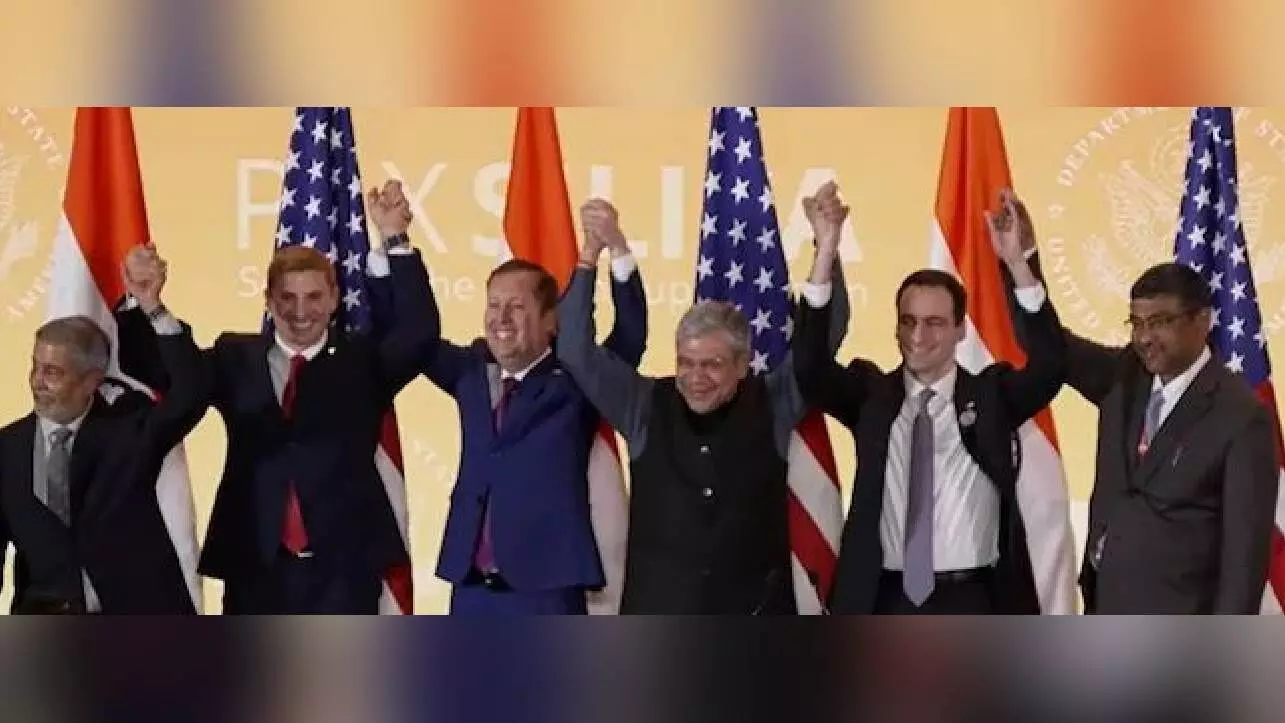
New Delhi: India on Friday joined the US-led strategic alliance Pax Silica, aimed at building resilient supply chains for critical minerals and artificial intelligence, with both sides projecting it as a move to cut over-dependence on a single country—an oblique reference to China.
Welcoming India to the coalition, US Under Secretary for Economic Affairs Jacob Helberg flagged risks arising from “massively over-concentrated” supply chains and threats of economic coercion and blackmail. While he did not name any country, his remarks were widely seen as directed at China’s export controls on rare earth minerals used across electronics, clean energy, aerospace, automotive and defence sectors. US Ambassador to India Sergio Gor said India brings strength to the coalition. “Policies that reinforce US-India tech cooperation will power AI innovation for years to come. We can share trusted AI technology with the world, especially with partners like India,” he said, adding that peace and prosperity stem from strength and sovereignty. India formally joined Pax Silica at a ceremony held during the AI Impact Summit, attended by Union Minister for Electronics and Information Technology Ashwini Vaishnaw, Helberg and Gor. Vaishnaw said the initiative went beyond a ceremonial signing. “We are not just holding a summit; we are building the future,” he said, highlighting India’s growing semiconductor capabilities and noting that Indian engineers are designing advanced two-nanometer chips. He said the global semiconductor industry would need around one million skilled professionals, presenting a major opportunity for India.
Helberg said the US and India were forging a pro-innovation approach to AI and rejecting “weaponised dependency”. “Economic security is national security,” he said, adding that Pax Silica seeks to diffuse intelligence and place the power of AI into people’s hands.
Gor described Pax Silica as a “coalition of capabilities” that would shape the 21st-century economic and technological order, with India playing a central role due to its engineering talent and progress in critical mineral processing.





